
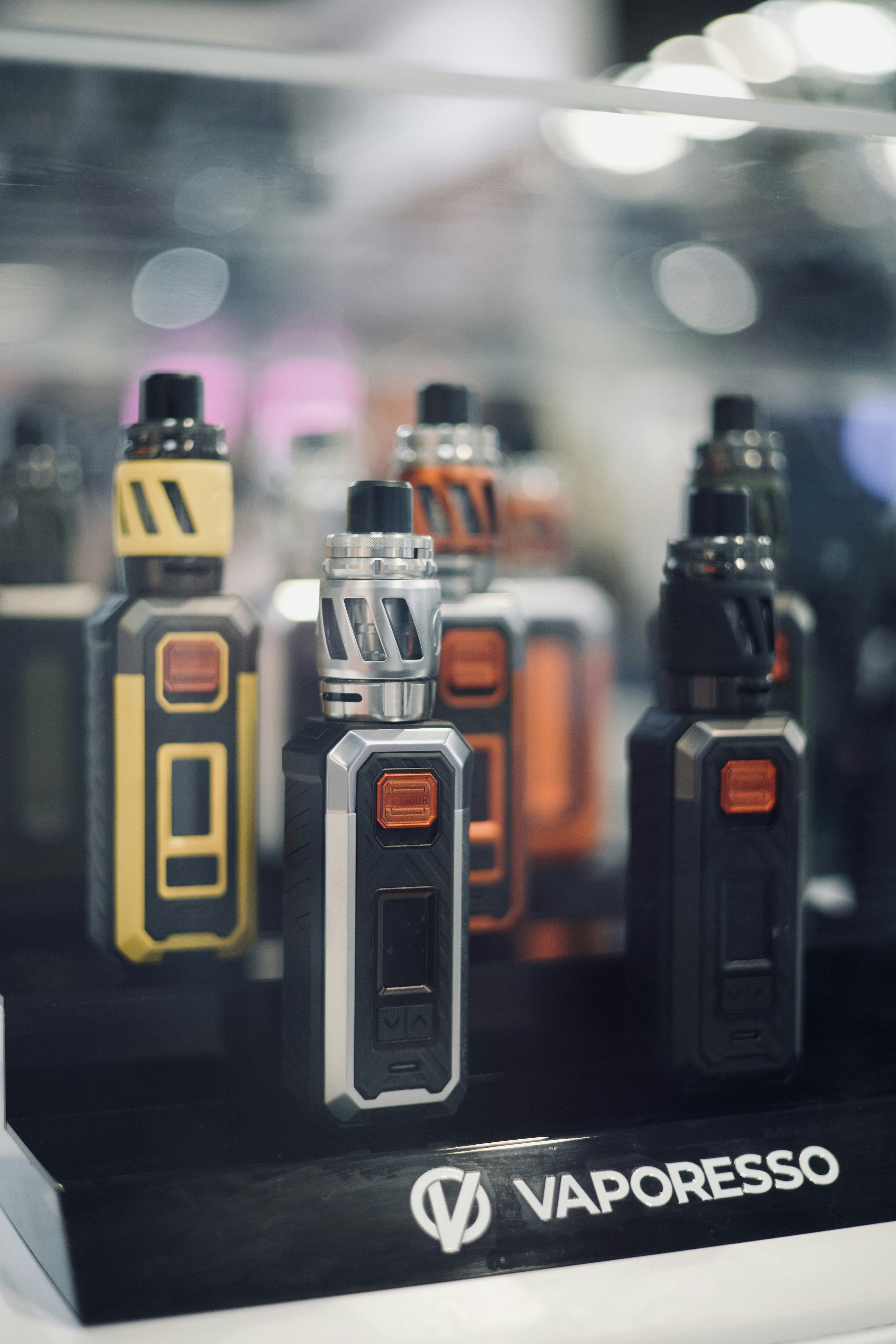
Vaping is the act of inhaling an aerosol generated by an electronic device that heats a liquid. Unlike a conventional cigarette, most vaping devices do not burn tobacco to produce smoke. Instead, the device warms a liquid mixture until some of it becomes airborne particles and droplets that can be breathed into the lungs. The process and the resulting emissions vary among products and how they are used.
Many devices share three basic components. A power source, usually a rechargeable battery, supplies electricity. A heating element, often called a coil, warms the liquid. The liquid is held in a reservoir, pod, or cartridge, which may be refillable or replaceable. When a person activates the device—by pressing a button or drawing on the mouthpiece—the battery powers the heater, and the resulting aerosol travels through the device for inhalation.
The liquid commonly contains solvents such as propylene glycol or vegetable glycerin, and may include nicotine and flavoring chemicals. Some products contain no nicotine, while others have varying concentrations. Aerosols may also carry substances formed during heating or released from device components. Their composition can depend on the liquid, device design, temperature, and pattern of use, so it is not identical across brands or even every puff.
Although vaping is sometimes described casually as producing “water vapor,” that description is misleading. The visible cloud is an aerosol: a mixture of fine liquid droplets and other particles suspended in air, not simply water in gaseous form. People nearby may also breathe in some of the emitted aerosol.
Vaping should not be treated as risk-free. Nicotine is addictive and can lead to dependence; exposure may be especially concerning for adolescents and during pregnancy. Even liquids without nicotine can produce inhalable substances whose effects are not fully understood, and some emissions can irritate or harm the respiratory system. The presence of flavorings or a familiar, mild-smelling cloud does not establish that inhalation is harmless. Product contents and exposure levels differ, and health effects remain an important consideration.
Vaping devices are often grouped by their shape, size, and method of supplying e-liquid. These categories are useful for describing common designs, but their names are not always applied consistently. A device may combine features associated with more than one type, and manufacturers may use different labels for similar products. Across the categories, devices generally heat e-liquid to produce an aerosol for inhalation, while differing in how the liquid is stored and how much control users have over operation.
Cigalikes are designed to resemble conventional cigarettes in size and appearance. Many have a slim, cylindrical shape and use a small cartridge or prefilled pod to hold e-liquid; some models have cartridges that can be replaced as needed. Their settings are generally limited, and certain versions activate when the user inhales. Pod systems are also compact, but typically use a small pod connected to a battery unit. Pods may be prefilled and replaceable or designed to be refilled. Some pod devices offer basic adjustments, such as power settings or airflow controls, while others provide little user adjustment.
Vape pens are usually longer and cylindrical, with a pen-like form. They commonly contain a refillable tank attached to a battery, although designs and liquid containers vary. Their controls may include an activation button or simple power adjustment. Box mods and other advanced devices tend to be larger, often with a box-shaped battery unit and a refillable tank. They commonly provide more adjustable settings, such as output power, alongside controls that vary by model. Disposable vapes are intended for single use, with e-liquid and a battery housed in one device; the unit is discarded when depleted or no longer functioning. Rules and availability for disposable products differ by location, so their legal status and supply are not uniform. These broad descriptions identify typical features rather than fixed boundaries between device types.
Product labels describe several features that are useful to distinguish, but no single label tells the whole story. One basic difference is how the e-liquid is supplied. Refillable devices have a tank or pod that users fill with liquid, while prefilled systems use cartridges or pods containing liquid in advance. Some products allow replacement of a used pod; others are designed for disposal when the liquid or battery is depleted. These descriptions concern how a device is maintained, not a complete account of its contents or effects.
E-liquids vary in flavor, nicotine concentration, and formulation. Labels may identify nicotine as freebase or as nicotine salts. These are different forms of nicotine used in vaping products, and their characteristics can influence how a liquid is formulated and experienced. Nicotine salts are often used in products with relatively high nicotine concentrations, while freebase nicotine appears in a range of products and strengths. Neither form is harmless: nicotine is addictive, and the presence or type of nicotine should not be inferred solely from a device’s appearance. Consumers should check the product information and applicable warnings rather than relying on broad category names.
Devices also differ in how they operate. In an inhale-activated model, drawing on the mouthpiece triggers the heating mechanism. Other devices require the user to press a button, sometimes while inhaling. Certain models provide adjustable power settings, whereas others operate at a preset level. Inside, a battery supplies energy to a heating component, which warms e-liquid to create an aerosol; the component’s design and operating conditions vary among products. Differences in liquid ingredients, nicotine strength, power, and heating parts can all affect the aerosol produced. Accordingly, terms such as refillable, prefilled, pod, or disposable describe only some design features. A device category by itself does not establish what a product contains or determine its risks. Reading the label, manufacturer’s instructions, and ingredient information provides a more useful basis for understanding a specific product, although product descriptions may not disclose every detail of aerosol exposure.
Nicotine is addictive, and regular exposure can lead to dependence and withdrawal symptoms. Vaping aerosol is not simply water vapor: depending on the device and liquid, it may contain nicotine, fine particles, metals, flavoring chemicals, and other substances that can affect health. Users inhale the aerosol directly, while people nearby may also be exposed. The levels and specific substances vary across products and conditions of use, so a device’s appearance or flavor does not establish that it is safe. Researchers continue to study the health effects of vaping, and important questions about risks from long-term use remain unresolved.
Vaping is especially inappropriate for young people, whose brains are still developing, for people who do not use tobacco, and during pregnancy. Nicotine exposure can pose particular concerns during these periods, and starting to vape may introduce avoidable health risks. People who smoke and are considering vaping should not assume that switching is risk-free or that using both products removes the harms of smoking. Individual circumstances differ; anyone weighing vaping, tobacco use, or quitting should discuss potential risks and cessation options with a qualified health professional. Clinicians can help identify evidence-based support suited to a person’s health and goals.
Rules for vaping products differ by jurisdiction and may change. Product standards, minimum-age requirements, flavor restrictions, labeling, and sales rules are not uniform, so readers should consult current local public-health guidance and official product-safety notices. Regulatory approval or legal sale should not be interpreted as proof that a product is harmless. For information, prioritize government health agencies, recognized public-health organizations, and qualified healthcare professionals over advertising, retailer descriptions, or social-media claims. Check when guidance was published, whether it addresses the specific product or population, and whether it distinguishes established evidence from areas still under study. If a product is recalled or subject to a safety warning, follow the relevant authority’s instructions and seek professional advice about next steps. These sources can also direct readers to quitlines, counseling, and other cessation services where available.